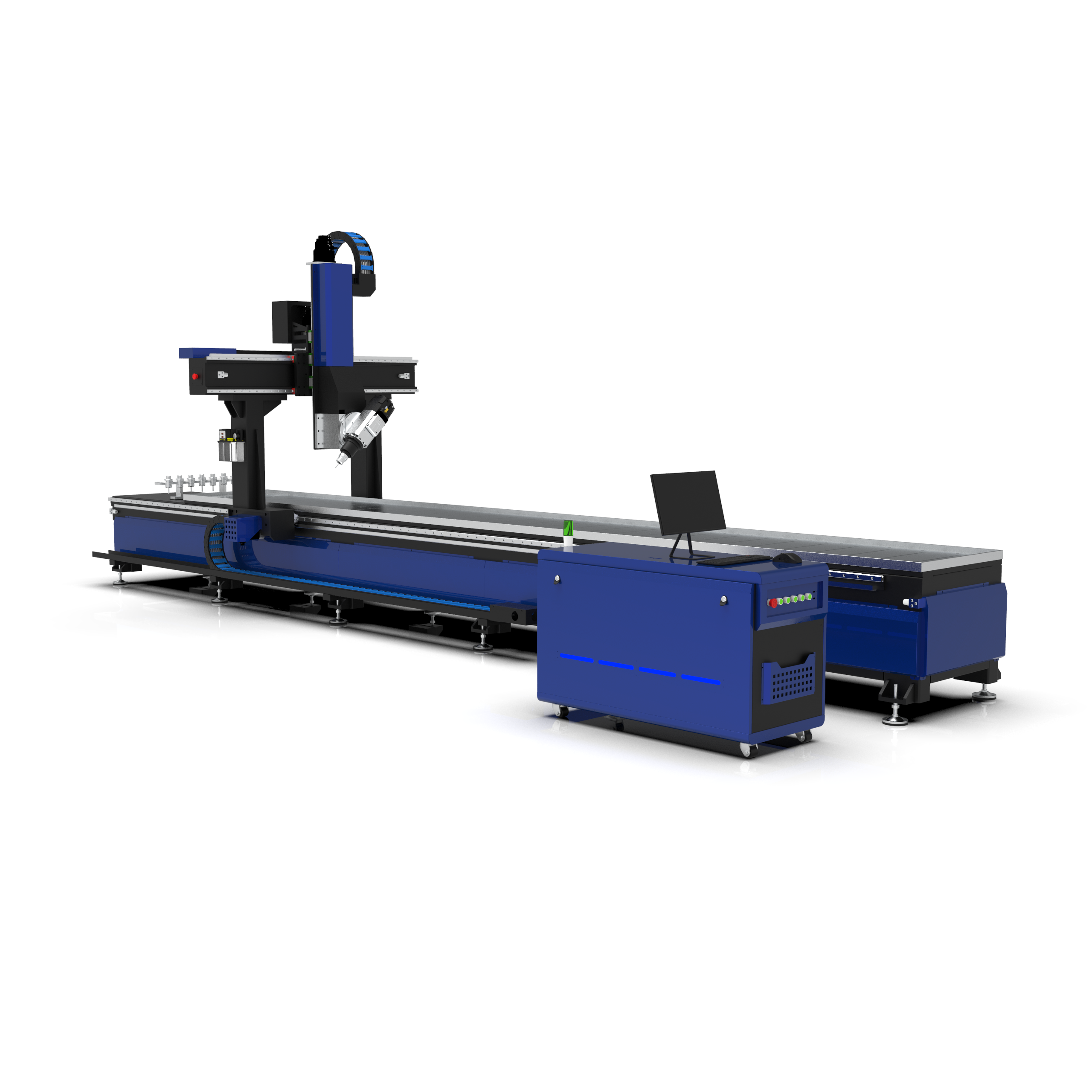
Poor aluminum profile cuts create compounding failures on the assembly line. Out-of-square joints compromise structural integrity in curtain walls and commercial framing assemblies. You often must force secondary end-milling just to salvage the misaligned parts. Transitioning from manual bandsaws or standard chop saws to a dedicated CNC setup is a necessary evolution. Manufacturers make this leap primarily to eliminate manual deburring and secondary machining entirely. A precision-engineered CNC aluminum cutting machine solves these exact bottlenecks. It controls workholding, feeds, and lubrication dynamically. You get install-ready, burr-free ends right off the saw. In this guide, we explore the mechanical requirements for flawless cuts. You will learn how to evaluate different workstation categories for your shop floor. Finally, we outline the exact buying criteria to maximize your production throughput safely.
Key Takeaways
Achieving a true 90-degree, burr-free cut requires rigid workholding, servo-driven feed rates, and micro-lubrication to prevent built-up edge (BUE).
Upgrading from standalone saws to an All-in-One CNC workstation eliminates the tolerance loss typically caused by moving profiles between separate cutting, drilling, and milling stations.
When evaluating an aluminum cutting CNC machine, prioritize hidden bottom-to-top upcut mechanisms and ERP software integration to maximize both operator safety and production throughput.
ROI is primarily realized through the elimination of secondary end-milling operations and the reduction of manual labor (often displacing 3-5 workers per shift).
The Hidden Costs of Poor Profile Ends (Business Problem)
The Assembly Bottleneck
Fractional deviations multiply rapidly during structural assembly. When horizontal bandsaws leave slightly angled edges, those tiny errors compound. You assemble a large architectural frame. The corners sit slightly open instead of flush. Workers rely heavily on internal gusset brackets to force the frame square. They add external flat plates to hold the assembly together rigidly. This adds unnecessary manual labor. It wastes expensive structural materials. It ultimately weakens the intended design strength.
The Secondary Machining Penalty
Profiles often transfer to a separate CNC mill simply to face the ends clean. This extra routing step wastes massive amounts of production time. You double the material handling requirements. You double the mechanical clamping cycles. Your daily throughput drops significantly. Every minute spent facing a rough edge is a minute lost for new production. Clean ends directly eliminate this costly secondary machining penalty.
Tolerance Degradation
Long, flexible aluminum extrusions bend easily during transport. You move them manually between disconnected cutting and drilling workstations. Even advanced robotic transfer lines struggle here. Micro-misalignments occur naturally during every physical transfer. Indexing errors happen every single time the part is reclamped. You lose precision continuously across the factory floor. A multi-step process introduces clamping deviations at every stop.
![Precision CNC aluminum profile cutting equipment]()
Mechanics of a "Zero-Burr" Finish: What to Look For (Technical Expertise)
Blade Entry Path (Bottom-to-Top Cutting)
Hidden up-cutting saw blades move deliberately from bottom to top. They run along rigid heavy-duty linear guideways. This orientation offers superior structural stability compared to traditional top-down chop saws. Top-down blades chop aggressively into the material surface. They can grab or deform delicate metal webs. Upcut mechanisms push the material securely against the heavy back fence. You get incredibly clean exit wounds on the metal.
Advanced Workholding
You need automatic multi-directional pneumatic clamping systems. They must clamp the material vertically and horizontally simultaneously. This eliminates high-frequency chatter entirely. It is especially critical for processing thin-walled extrusions. Operators adjust the pneumatic pressure carefully based on material thickness. It holds the piece firmly without crushing delicate internal chambers. Rigid workholding guarantees the blade tracks perfectly straight.
Thermal and Chip Management
Aluminum gets extremely sticky when heated by friction. It welds directly to the carbide blade teeth. Industry professionals call this built-up edge (BUE). Automatic oil-mist micro-lubrication (MQL) prevents BUE completely. It sprays a precise, microscopic mist exactly where the blade meets the metal. You get a flawless mirror-like surface finish. You also avoid the massive environmental mess of traditional flood coolant.
Servo-Driven Stepless Speed Regulation
Programmable feed rates matter immensely for surface quality. You can set feed rates anywhere from 0 to 3 meters per minute. You match the feed rate precisely to specific alloy hardness. You adjust it dynamically for varying profile thicknesses. Servo drives keep the cutting speed perfectly uniform throughout the stroke. Manual operators cannot replicate this perfectly consistent feed rate.
Evaluating Solution Categories: Standalone Saws vs. Workstations (Evaluation Framework)
High-Speed Standalone CNC Saws
These machines are best for high-volume, straight 90-degree cuts. They handle fixed 45-degree cuts perfectly well. They deliver ±0.1mm accuracy consistently all day. They feature intuitive touchscreen PLC controls. Automatic bar feeding systems run continuous batches unattended. A high-quality aluminum profile cutting machine leaves completely smooth edges. You skip secondary processing entirely for basic framing parts.
Specialized Arbitrary Angle Saws
Complex facade framing requires unique angle cuts. Curtain walls and modern skylights demand weird compound angles. Specialized machines feature heavy dual-head configurations. They swing infinitely from 0 to 45 degrees dynamically. Magnetic ruler control systems manage the exact head positioning. Operators get highly precise digital readouts every single time. This prevents costly manual measurement errors on complex architectural profiles.
All-In-One CNC Machining Centers (Workstations)
These centers are best for complete Industry 4.0 automation. These advanced 12-axis systems combine multiple operations flawlessly. They execute cutting, end-milling, and drilling in a single clamping event. They solve the massive footprint issues of multi-machine robot lines. They eliminate the tolerance loss occurring between isolated stations. One machine produces a fully finished part ready for immediate assembly.
Comparison of Aluminum Cutting Solutions |
Equipment Category | Best Application Fit | Key Differentiator | Automation Level |
Standalone CNC Saws | High-volume sizing (90°/45°) | Continuous automatic bar feeding | Medium (Batch processing) |
Arbitrary Angle Saws | Skylights, complex facades | 0-45° infinite swing capability | Medium (Digital readout driven) |
All-In-One Centers | Window, door, structural components | Multi-axis cutting, milling, and drilling | High (Industry 4.0 integrated) |
Critical Buying Criteria for Production Scale (Authoritativeness)
Software Ecosystem & ERP Integration
Assess the machine software capabilities deeply before purchasing. The machine must pull cut lists directly from factory ERP or CAM software. This digital handshake minimizes operator manual input errors. Look for automatic barcode labeling systems integrated onto the outfeed. They enable seamless downstream material tracking. Assembly workers simply scan the printed label. This prevents costly assembly confusion on large jobs.
Verified Accuracy Metrics
Establish firm baseline performance expectations. A reliable CNC aluminum profile cutting machine should guarantee cutting precision of ±0.15mm or better. It should easily deliver milling accuracy around ±0.05mm. Never accept verbal promises regarding precision. Ask manufacturers for certified test results. Require them to perform live test cuts on your specific structural extrusions.
Operator Safety and Environmental Compliance
Evaluate the physical machine enclosure thoroughly. Fully enclosed machining cabins are absolutely mandatory for modern shops. They contain flying aluminum swarf effectively during high-speed routing. Automatic chip evacuation systems pull dangerous scrap away from the primary cutting zone. Integrated dust collection systems filter the surrounding factory air. This setup ensures you comply easily with OSHA and strict local shop regulations.
Implementation Realities & Adoption Risks (Experience)
Space and Workflow Layout
All-in-One workstations definitely save space compared to full robotic transfer lines. However, they still require significant linear floor space. You must plan adequately for automatic rear bar loaders. You need ample forward room for finished part outfeed tables. Material flow into and out of the machine dictates your actual daily throughput. Poor workflow layout chokes even the fastest CNC machine.
Operator Upskilling
You are transitioning away from manual metal cutting. A centralized aluminum cutting CNC machine shifts the required employee skill set. Operators no longer rely purely on physical craftsmanship or feeling the cut. They transition to digital file management. They handle routine machine sensor troubleshooting. Proper vendor training is essential to bridge this digital gap effectively.
Maintenance Dependencies
Maintaining clean ends requires strict adherence to preventative maintenance schedules. You must perform specific routine tasks regularly to extend expensive blade life.
Check linear guide lubrication weekly to ensure perfectly smooth upcut travel.
Calibrate the servo material feeders monthly to maintain strict positioning accuracy.
Monitor and maintain proper mist-coolant fluid ratios to prevent aluminum sticking.
Empty the automatic chip evacuation bins routinely before they back up and overflow.
Common End-Finish Troubleshooting |
Observed Defect | Probable Root Cause | Immediate Action Step |
Heavy burrs on exit edge | Dull blade or incorrect feed rate | Inspect carbide teeth; slow the servo feed |
Chatter marks on face | Insufficient clamping pressure | Increase horizontal/vertical pneumatic pressure |
Aluminum welded to blade | MQL system failure (No oil mist) | Check air pressure and refill lubricant reservoir |
Conclusion
Solving the clean end problem requires extreme machine rigidity, bottom-to-top blade entry, and automated feed control, rather than basic operator skill.
We strongly recommend standalone automatic saws for pure high-volume straight sizing tasks.
We recommend hybrid 12-axis machining centers for highly complex window, door, and curtain wall manufacturing workflows.
Always advise buyers to request sample cuts of their specific complex extrusion profiles from manufacturers.
Physically verify the resulting surface finish and dimensional accuracy with your own calipers before signing a purchase order.
FAQ
Q: Can a single CNC aluminum profile cutting machine handle both thick structural extrusions and thin-walled frames?
A: Yes, it handles both effectively. The machine must feature servo-driven stepless feed regulation. It must also have adjustable multi-directional clamping pressure. This prevents crushing delicate thin walls while still maintaining rigid force for heavy structural walls.
Q: How often do blades need to be replaced to maintain a burr-free cut?
A: It depends heavily on the specific alloy hardness and shift volume. However, utilizing premium carbide-tipped blades paired with automated oil-mist lubrication significantly extends tool life. MQL processing lasts much longer compared to dry cutting methods.
Q: Do these machines require an active air supply?
A: Yes, industrial CNC saws require consistent, dry, and clean compressed air. The air supply actuates the heavy pneumatic clamps. It also powers the critical oil misting systems. Drops in air pressure directly cause clamping chatter and extremely poor end finishes.