Contents
Introduction
The Core Working Principle of 1325 Wood Routers
Structural Components That Enable 1325 Wood Routers to Operate
Motion Control: How the 3-Axis System Drives Precision
Spindle Operation and Cutting Mechanics
Software Workflow: Turning Digital Designs into Physical Cuts
Material Handling and Workholding in 1325 Wood Routers
Performance Advantages Compared to Other CNC Router Sizes
Conclusion
FAQ
Introduction
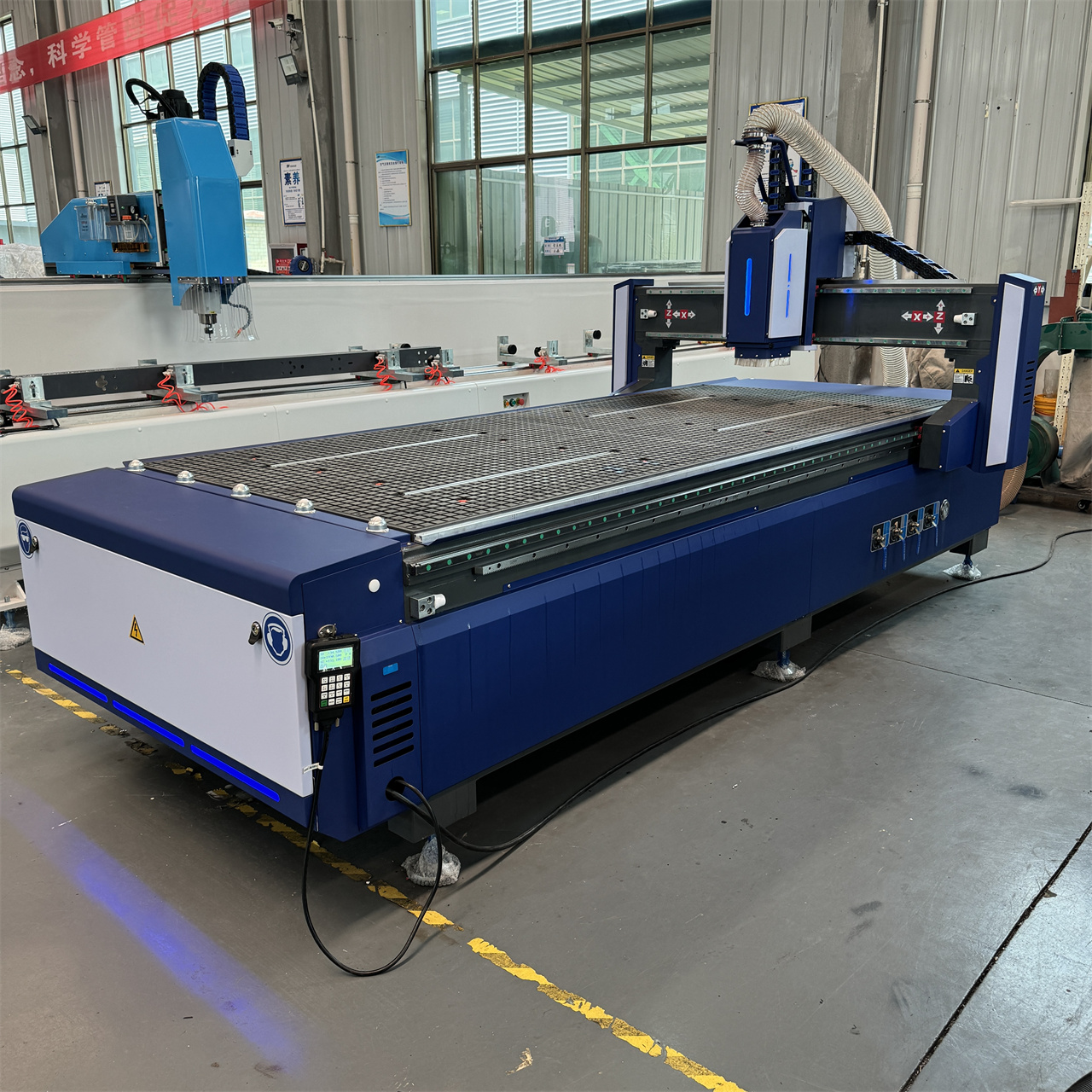
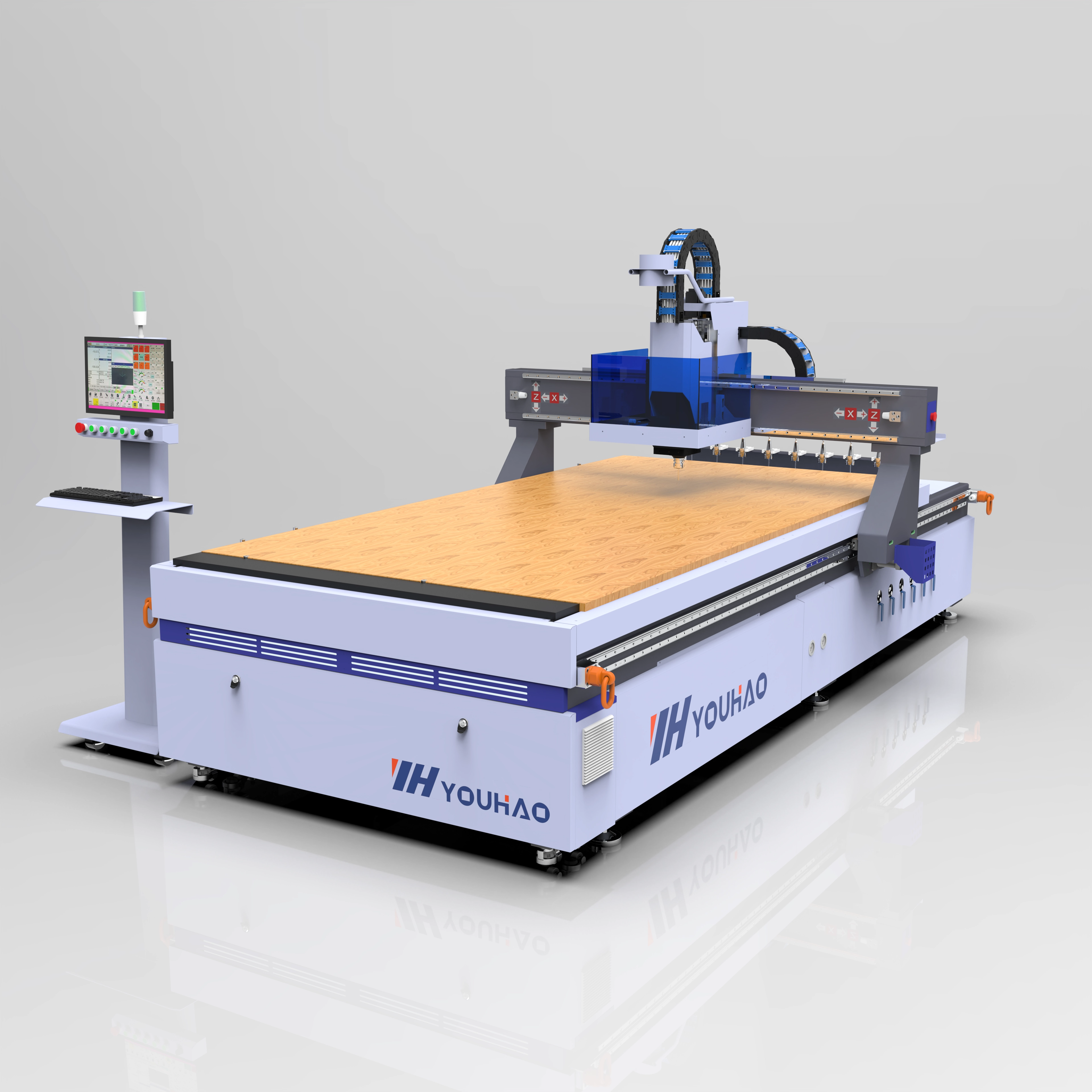
Understanding how 1325 wood routers operate is essential for manufacturers, workshop owners, and CNC beginners who want consistent precision and efficiency in woodworking production. These machines—including models such as 3axis 1325 Cnc Wood Router, Cnc Router Machine Wood 1325, 1325 Wood Cnc Machine, and 1325 Cnc Router Wood 3 Axis 4X8 Ft—are engineered for large-format processing and professional-grade machining. Their operation blends mechanical accuracy, automated motion control, and digital design input, forming a complete system designed for carving, engraving, cutting, and shaping a wide range of wood materials. This article provides a technical yet practical breakdown of how these routers work and why their design enables such high-level performance.
The Core Working Principle of 1325 Wood Routers
At the heart of all 1325 wood routers is a coordinated system of motion control, spindle rotation, and programmed toolpaths. The machine receives computer-generated commands and converts them into synchronized mechanical movements. These movements dictate the path of the cutting tool as it interacts with the wood surface. A 1325 Wood Cnc Machine processes tasks by following G-code instructions generated by CAM software, telling the router where and how to cut, engrave, or carve. Because the 1325 format represents a 1300×2500 mm working area, these routers are designed to handle full-size 4×8 ft panels efficiently. The working principle ensures repeatable accuracy, minimal human error, and consistent output. By automating complex woodworking tasks, the Cnc Router Machine Wood 1325 delivers stable, high-speed performance across continuous production cycles.

Structural Components That Enable 1325 Wood Routers to Operate
The functionality of 1325 wood routers relies heavily on a rigid structure and precision-engineered components. These include the machine frame, gantry, guide rails, ball screws or rack-and-pinion drives, spindle unit, and electrical cabinet. The frame provides the stability required for high-speed milling, while the gantry supports the motion of the X and Y axes. A Wood Router Manufacturer typically prioritizes heavy-duty steel welding to reduce vibration and maintain accuracy over time. High-quality linear guides ensure smooth movement, while motors—either stepper or servo—translate electrical signals into precise mechanical actions. Every structural part contributes directly to how the machine executes its cutting tasks. The combination of strength and precision is what allows systems such as the 1325 Cnc Router Wood 3 Axis 4X8 Ft to operate at industrial-level performance, producing smooth curves, sharp angles, and accurate engraving depth on a wide range of wood materials.
Motion Control: How the 3-Axis System Drives Precision
The fundamental operation of 1325 wood routers depends on their 3-axis motion system: X, Y, and Z. The 3axis 1325 Cnc Wood Router uses these three coordinated axes to move the cutting tool exactly where the G-code instructs it to go. The X and Y axes manage horizontal positioning across the table surface, while the Z axis controls vertical depth movement. Motion controllers synchronize motor output, ensuring that even complex shapes are machined smoothly without deflection or hesitation. Rack-and-pinion systems often drive the X and Y axes for speed and durability, while the Z axis may use a ball screw for finer precision. This combination allows the router to handle large sheet materials efficiently while maintaining intricate detail in carvings or engravings. The 3-axis design is ideal for cabinetry, decorative panel work, door production, and relief carving—applications where accuracy is critical.
Table 1: Functional Role of Each Axis in 1325 Wood Routers
| Axis | Movement | Primary Function |
| X Axis | Left–Right | Controls horizontal travel across machine width |
| Y Axis | Front–Back | Moves tool along the machine length (4×8 ft capability) |
| Z Axis | Up–Down | Adjusts cutting depth, engraving detail, and plunge rate |
The synergy of these axes allows the 1325 wood routers to deliver high-precision results even at fast processing speeds. This multi-axis coordination is central to how these machines execute complex geometries with consistency.
Spindle Operation and Cutting Mechanics
The spindle is the working heart of the 1325 wood routers, responsible for rotating the cutting tool at speeds often ranging from 6,000 to 24,000 RPM. Spindle power—usually between 3 kW and 6 kW—determines how efficiently the machine can cut dense hardwood, plywood, MDF, acrylic, or laminate. As the spindle rotates the tool, the axes move the tool along pre-programmed paths. A 1325 Wood Cnc Machine may use air-cooled or water-cooled spindles depending on the application and duty cycle. Higher cooling efficiency supports prolonged operation, especially in industrial settings. The interaction between spindle speed, feed rate, and toolpath control results in clean edges and surface quality. The cutting mechanics are optimized for panel-based processing, allowing the machine to carve decorative elements, cut cabinet components, produce doors, and engrave detailed artwork. Proper spindle calibration is essential for achieving accuracy and reducing tool wear.
Software Workflow: Turning Digital Designs into Physical Cuts
A key part of how 1325 wood routers work lies in their software workflow. The machine does not act independently—it responds to digital commands created through CAD and CAM software. Users design shapes, patterns, or components in CAD programs, which are then processed into toolpaths in CAM software. This output becomes G-code, which the CNC controller interprets. The process allows exact duplication of designs, making the Cnc Router Machine Wood 1325 suitable for mass production or custom fabrication. Operators can adjust parameters such as cutting depth, pass count, spindle speed, and feed rate. The accuracy of the digital workflow ensures that even complicated 3D relief carvings or multi-layer engravings are executed flawlessly. Software integration is one of the main advantages that 1325 Cnc Router Wood 3 Axis 4X8 Ft machines offer over manual woodworking tools.
Table 2: Digital Workflow Stages of 1325 Wood Routers
| Stage | Description |
| CAD Design | Create part geometry or artwork |
| CAM Toolpath | Generate cutting strategy and G-code |
| CNC Controller | Interpret and execute commands |
| Machine Operation | Physical cutting, carving, or engraving |
This digital-to-physical workflow is the backbone of consistent CNC results, allowing users to maintain accuracy, reduce manual labor, and achieve repeatable outcomes.
Material Handling and Workholding in 1325 Wood Routers
The working table and clamping method directly influence how 1325 wood routers operate during production. These machines typically use vacuum tables, T-slot clamps, or hybrid systems to secure material firmly in place. A vacuum table is preferred for full-sheet processing because it ensures even pressure distribution and rapid loading. The large 4×8 ft format of the 1325 Cnc Router Wood 3 Axis 4X8 Ft is especially beneficial for cabinet panels, doors, furniture parts, and signage materials. Proper workholding prevents material shifting during high-speed routing, enhancing both safety and accuracy. The machine then moves the tool across the secured material following programmed toolpaths. Material handling becomes seamless when combined with dust collection systems that maintain a clean cutting area. This entire setup ensures that the machine can operate continuously while maintaining stable and precise cutting conditions.

Performance Advantages Compared to Other CNC Router Sizes
The design and operation of 1325 wood routers provide several advantages over smaller or larger CNC router formats. Their 4×8 ft working area offers maximum versatility for sheet-based woodworking while maintaining a manageable footprint for workshops. Machines such as the 3axis 1325 Cnc Wood Router provide an ideal balance between power, speed, and accuracy, making them suitable for both small workshops and high-volume factories. Compared to smaller machines, the 1325 format can process standard plywood and MDF sheets without resizing. Compared to oversized industrial routers, it requires less maintenance, lower power consumption, and easier operator training. Because of the high-speed spindle and robust frame, the 1325 Wood Cnc Machine can output smoother finishes, reduce sanding time, and produce detailed carvings with minimal post-processing. This efficiency makes the 1325 size one of the most widely adopted options in the woodworking industry.
Conclusion
The operation of 1325 wood routers combines mechanical precision, advanced motion control, spindle performance, and digital programming to deliver high-quality woodworking results. Machines such as the Cnc Router Machine Wood 1325, 1325 Cnc Router Wood 3 Axis 4X8 Ft, and 3axis 1325 Cnc Wood Router are engineered for large-format panel processing with consistent accuracy and reliability. Their 3-axis motion system, software integration, and stable structural design allow them to execute complex toolpaths, handle full-sheet materials, and maintain precision at high speeds. Understanding how these routers work enables users to optimize performance, improve productivity, and produce exceptional woodworking results.
FAQ
1. What does “1325” mean in 1325 wood routers?
It refers to a working area of 1300 mm × 2500 mm, suitable for full-size 4×8 ft sheets.
2. Are 1325 wood routers suitable for large-scale production?
Yes. Their stability, speed, and automation make them ideal for continuous industrial use.
3. Can a 1325 router cut materials other than wood?
Absolutely. Most models also cut acrylic, PVC, foam board, composite materials, and soft metals.
4. Do 1325 routers require advanced CNC skills?
Basic CNC knowledge is needed, but modern controllers and software make operation user-friendly.
5. What industries commonly use 1325 wood routers?
Furniture manufacturing, cabinetry, sign-making, door production, decoration carving, and prototyping.