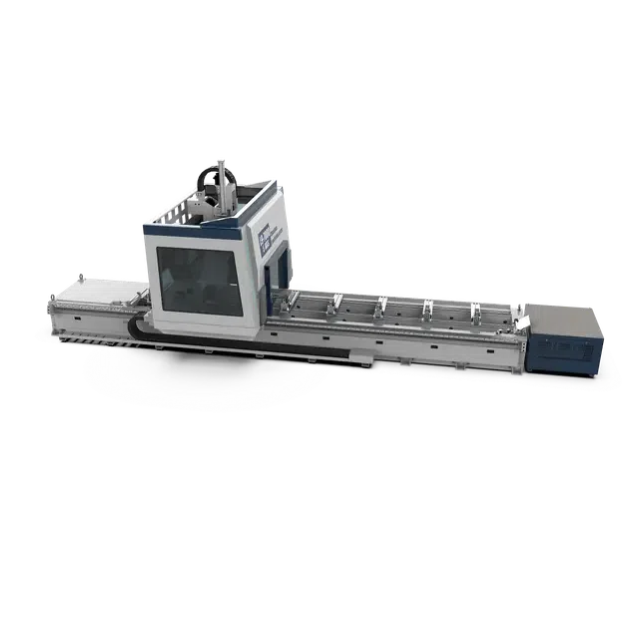
When manufacturers consider investing in a cnc aluminum profile machine, the decision is rarely simple. Different axis configurations and working lengths serve very different production needs, and choosing the right model will directly impact accuracy, throughput, and long-term costs. At Shandong Youhao Energy Technology Co., Ltd., we specialize in offering machines tailored to these requirements, from compact 3-axis solutions to large 5-axis machining centers. This article explains how to understand axis counts, what each option offers, and how to decide which one is best for your shop.
What does axis mean for aluminum profile work?
In machining, an “axis” refers to the direction in which the cutting tool or workpiece can move. For aluminum profiles, axis count dictates the complexity of shapes and operations that can be achieved.
3-axis simplified
A 3-axis cnc aluminum profile machine allows the cutting tool to move up and down, side to side, and forward and backward. It is well-suited for drilling holes, simple slotting, and basic contouring. Shops producing straightforward frames, rails, or extrusions with repetitive cuts often find this option sufficient.
4-axis with rotary control
Adding a fourth axis brings rotation, allowing machining on multiple faces without reclamping. A 4axis cnc aluminum profile drilling and milling machine 4500mm or 7000mm is highly effective for manufacturers handling long components, such as door and window profiles, because it eliminates the time wasted on repositioning.
5-axis flexibility
The 5axis 7000mm cnc aluminum profile machine center provides full freedom, with the cutting tool tilting and rotating to approach the workpiece from any angle. This allows the creation of complex beveled edges, compound angles, and intricate contours in one setup. For aerospace, automotive, or architectural projects that demand high precision and advanced geometry, a 5-axis model is unmatched.
Pros and cons: cost, cycle time, accuracy and flexibility
Every shop must balance budget, speed, and product mix. Axis configuration directly influences these factors.
3-axis benefits and limits
The 3axis cnc aluminum profile machine 3000mm or 6000mm comes with the advantage of simplicity. Programming is easier, maintenance is lower, and the price is accessible. However, its limits become obvious when parts require machining on multiple faces or when tolerances tighten over long spans. Repositioning workpieces adds labor and increases the risk of error.
4-axis production edge
The 4axis cnc aluminum profile drilling and milling machine enables much faster cycle times by allowing machining from different orientations in one clamping. For example, drilling and slotting on adjacent sides of a profile can be completed seamlessly. This efficiency reduces both operator intervention and scrap. The drawback is higher initial cost compared with 3-axis machines.
5-axis premium results
Investing in a 5axis 7000mm cnc aluminum profile machine center pays off when complex geometry is a daily requirement. The ability to machine difficult shapes in one pass ensures unparalleled precision. Yet, programming complexity and machine price are significant. For manufacturers with simpler profiles, the extra capacity might remain underutilized.
Which industries benefit most?
Each axis configuration aligns with specific industry needs. Furniture makers often rely on 3-axis machines for high-volume, repetitive parts. Window and façade fabricators prefer 4-axis systems because they can perform angled slots and face drilling without reclamping. Automotive and aerospace companies use 5-axis models to meet strict tolerance requirements while shaping intricate components such as structural brackets, rails, and body parts. By matching the machine to your sector, you maximize productivity without overspending.

How working length affects choice
Alongside axis count, machine length is a decisive factor. Aluminum extrusions vary from short pieces for fixtures to long spans for curtain walls or transport equipment, and the machine must accommodate these dimensions.
Standard lengths and their uses
A 3000mm bed is sufficient for small components, furniture fixtures, and compact assemblies. A 4500mm or 6000mm configuration suits door frames, windows, and structural beams commonly used in construction. For oversized architectural panels or automotive rails, 7000mm machines provide the necessary reach.
Handling long profiles
The challenge with long aluminum profiles is not only supporting the material but also maintaining accuracy along the full length. Machines designed for 6000mm or 7000mm parts use advanced clamping systems, reinforced beds, and high-precision drives to minimize vibration and deflection. This ensures the final product meets demanding tolerance requirements.
Why length and rigidity matter together
A machine may technically support long parts, but without adequate rigidity, precision drops sharply over distance. That is why premium machines include robust frames, linear guideways, and reinforced gantry designs. For industries like curtain wall construction, where alignment across multiple meters is critical, these features are not optional—they are essential for product quality and customer satisfaction.
Key specs to compare
Axis and length are the first considerations, but other technical factors must not be overlooked when selecting a cnc aluminum profile machine.
Spindle and power
For aluminum, spindle speed and torque are crucial. High-RPM spindles deliver clean cuts, while sufficient torque ensures performance during heavy milling. Depending on your part mix, selecting the correct spindle power prevents tool wear and improves surface finish.
Automatic tool changer
Modern machines integrate ATC systems, allowing automatic switching between drills, mills, and cutters. For complex routines, this saves significant time and avoids manual errors. A larger tool magazine also means more flexibility to run different jobs back-to-back.
Control system and usability
Ease of programming is just as important as mechanical design. Our machines use intuitive software interfaces with parameter libraries, making it easier to set up complex jobs quickly. A user-friendly control system reduces the learning curve for operators and speeds up production.
Supporting technologies
In addition, coolant systems, chip evacuation, and smart sensors are becoming increasingly important. They maintain tool life, keep surfaces clean, and provide real-time feedback to operators. Together, these technologies ensure consistent results in demanding environments.
Decision checklist: how to choose for your shop
To narrow down the options, buyers should evaluate a few key questions before making an investment.
What is your product mix?
If most components are straightforward frames or repeatable profiles, a 3-axis machine is often enough. If your business serves industries requiring parts with angled holes or slots, a 4-axis solution might be ideal. For companies handling highly customized projects with complex shapes, only a 5-axis machine will deliver the required flexibility.
How much space do you have?
A 7000mm machine requires substantial floor space and handling equipment, while a 3000mm or 4500mm model fits in smaller workshops.
What accuracy and tolerance do your customers demand?
When clients require precise joints and seamless assemblies, higher axis counts and longer machines with advanced drives are essential to maintain quality.
What is your budget today vs. future expansion plans?
Sometimes starting with a mid-range 4-axis machine is the best path, with plans to upgrade to a 5-axis center as production grows.
How quickly do you need ROI?
Factories focused on high-volume parts often see quick returns from automation and reduced labor costs. For specialized industries, ROI may come from premium pricing on high-precision components. Understanding your financial targets will help determine which investment level is appropriate.
Conclusion
Selecting the right cnc aluminum profile machine is ultimately about aligning axis capabilities and machine length with the specific needs of your production. At Shandong Youhao Energy Technology Co., Ltd., we provide 3-axis, 4-axis, and 5-axis machines across multiple lengths, giving manufacturers the ability to choose confidently. Whether your shop focuses on standard aluminum frames or complex architectural components, our equipment is designed to enhance precision, efficiency, and competitiveness. To learn more about our full range of solutions and discuss your project requirements, please contact us today.