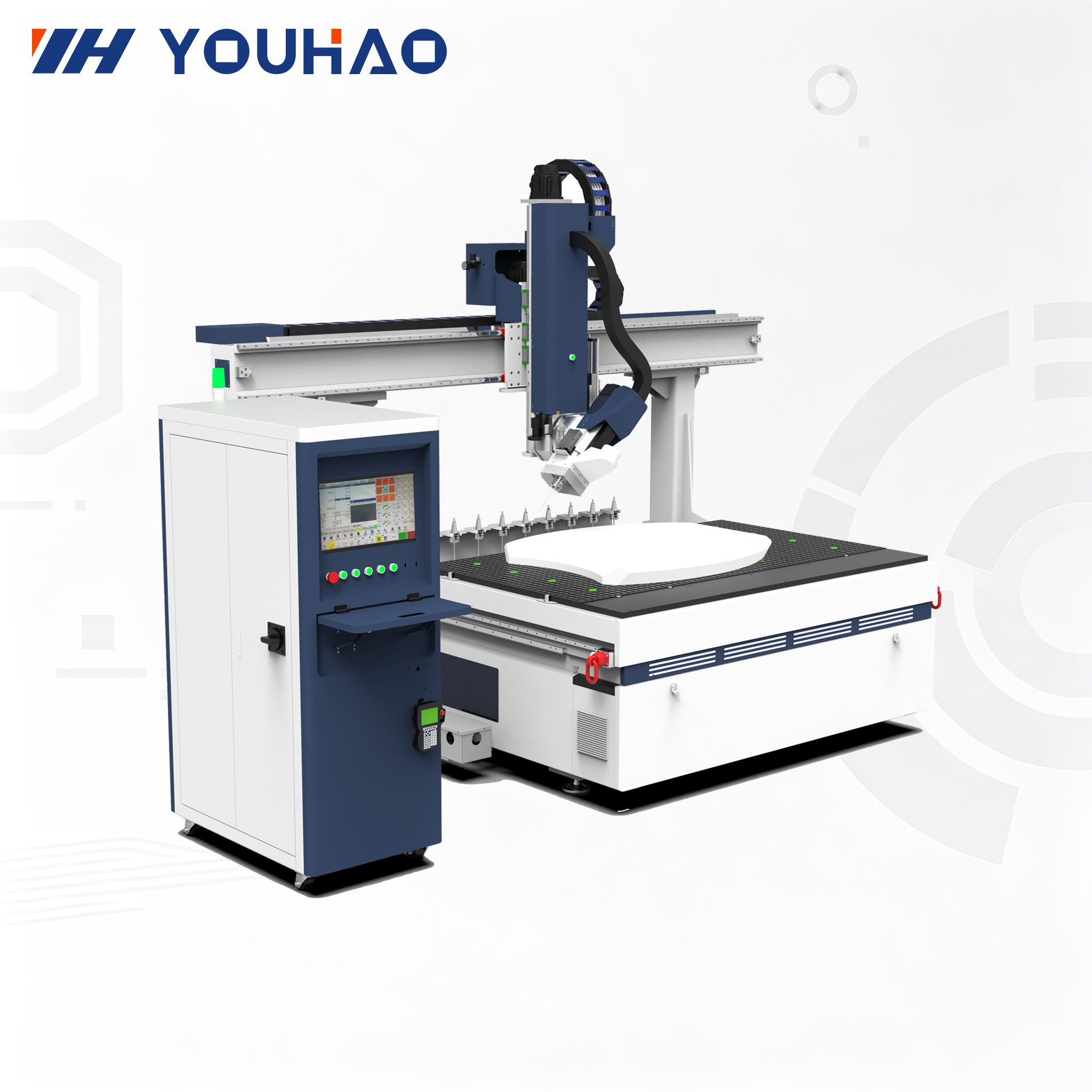
Upgrading from standard flat-panel routing introduces new variables in cost, software complexity, and machine footprint. Woodworking shops eventually hit a critical production bottleneck when expanding their product lines. Three-axis limitations demand multiple manual setups when processing complex 3D shapes or cylindrical wood parts. Operators must manually flip the material. This physical intervention introduces human error. It also dramatically increases direct labor costs. Relying on manual repositioning simply limits your production scaling.
This guide breaks down the exact operational capabilities, production advantages, and technical prerequisites of adding a 4-axis machine to your woodworking workflow. We explore how pivoting spindles differ from rotary attachments. We cover specific commercial applications shaping the modern timber industry. You will learn exactly how advanced hardware impacts your shop's efficiency. You will discover the software requirements necessary for continuous rotary toolpaths. This knowledge helps you specify the right machine for your actual production needs.
Key Takeaways
A 4 axis CNC wood router eliminates manual repositioning for multi-sided machining, drastically reducing fixture-related downtime.
The primary applications include complex 3D statuary, custom table legs, architectural columns, and precise angled joinery.
Success depends heavily on upgrading CAD/CAM software; a 4-axis machine requires a robust post-processor capable of handling continuous rotary toolpaths.
Combining a 4-axis setup with an ATC CNC router for wood carving yields the highest ROI for production-scale shops.
True 4-Axis Spindle vs. 4th Axis Rotary: Clarifying the Capabilities
Buyers often conflate a true 4-axis machine and a 3-axis machine carrying a rotary attachment. Many make costly assumptions during the procurement phase. They believe any machine handling cylindrical objects qualifies as a true multi-axis system. Decision-makers must understand this mechanical difference clearly. Aligning equipment capabilities directly to your production goals prevents expensive sourcing mistakes. Both styles handle complex wood processing beautifully. They achieve results through entirely different mechanical movements.
The Rotary 4th Axis (A-Axis)
The A-axis setup relies on a lathe-like chuck mounted to the machine bed. The wood material rotates continuously or indexes to specific angles. Meanwhile, the spindle moves purely in the X, Y, and Z directions. A 4 axis cnc router machine with 180 swing head shines when machining cylindrical items. Woodshops use this configuration daily. They produce stair balusters, custom pool cues, and ornate table legs. The spindle never tilts. It only approaches the rotating wood from directly above. This creates a highly efficient workflow for radially symmetric parts.
The True 4-Axis (Pivoting Spindle)
A true 4-axis configuration moves quite differently. The spindle itself pivots. This pivot usually occurs along the X or Y axis. The wooden workpiece remains completely stationary on the vacuum bed. This pivoting action allows the cutting tool to approach the wood from varying angles. Shops deploy this mechanism for complex edge profiles. It easily handles deep undercuts in architectural millwork. You can machine angled lock-miter joinery directly on large panels. The pivoting head reaches areas a fixed vertical spindle cannot access.
Common Mistake: Do not buy a rotary axis attachment when your product line primarily requires angled mortise and tenon joints on flat panels. A rotary axis cannot help process flat panel joinery. You need a pivoting spindle.
Feature Comparison Chart
Feature
Rotary 4th Axis (A-Axis)
True 4-Axis (Pivoting Spindle)
Motion Mechanics
Material rotates; Spindle remains strictly vertical
Material sits stationary; Spindle tilts on X/Y axis
Map the mechanical capabilities directly to commercial wood products. Transitioning out of simple flat-panel processing opens highly profitable markets. Custom woodworking shops leverage these capabilities to differentiate themselves from mass-market competitors. We see shops capturing premium architectural contracts using these exact advanced routing techniques.
Architectural Columns and Turned Furniture Parts
Traditional manual wood lathes require immense operator skill. They also lack high-volume repeatability. Moving to automated cylindrical milling changes this dynamic entirely. A modern machine easily carves flutes, spirals, and intricate patterns. It works seamlessly around a 360-degree wooden cylinder. Operators program complex geometries once. The machine then produces hundreds of identical wooden columns. You eliminate the human inconsistencies inherent in hand-turning. Typical applications include:
Fluted architectural columns for restorations
Helical stair balusters
Custom pool cues
Intricately turned dining table legs
Complex 3D Reliefs and Statuary
Investing in a 3D wood carving CNC machine unlocks true sculptural capabilities. Standard 3-axis machines leave visual seam lines. Flipping the stock manually usually causes alignment errors. These errors cause ugly "stair-stepping" on the finished wood surface. Advanced multi-axis interpolation prevents this completely. You can machine continuous, fluid curves on custom corbels. You can carve ornate fireplace mantels. You can produce complex decorative sculptures. The cutting tool remains engaged continuously. This delivers a pristine surface finish requiring minimal manual sanding afterward.
Precision Angled Joinery and Undercuts
A pivoting spindle revolutionizes cabinet making and timber framing. You can machine complex dovetails directly into large stock. You can mill mortise and tenon joints rapidly. The pivoting action creates custom edge chamfers effortlessly. You achieve this without buying specialized angled aggregates. You avoid building complex custom jigs. The machine head simply tilts to the required angle. It performs the undercut perfectly. Cabinet makers often use this capability for hidden fasteners and seamless edge banding preparation.
Production Efficiency & ROI: Why Upgrade from 3-Axis?
Evaluating the operational cost savings justifies the initial capital expenditure. Modern woodshops must balance machine costs against daily efficiency gains. The numbers usually favor the upgrade when labor costs run high. Let us explore the specific production multipliers driving this business case.
Reduction in Setup Time (Fixturing)
Traditional 3-axis routing demands complex multi-stage holding jigs. You must reposition the wood multiple times. This allows you to machine different faces safely. A pivoting 4-axis machine processes three or four sides of a wooden workpiece in a single setup. This capability virtually eliminates fixture-related downtime. Operators load the machine bed once. They walk away while the machine finishes the entire part. Your team can focus on assembly or finishing instead of tending the machine constantly.
Decreased Scrap Rates
Human operators occasionally make indexing errors. Flipping a heavy wooden workpiece manually often misaligns the origin point. Even a fraction of a millimeter ruins complex 3D carvings. Upgrading eliminates these indexing errors. The machine holds the wood firmly in one single position. It maintains perfect mathematical alignment throughout the entire carve. This reliability plummets your daily scrap rates. You waste far less expensive hardwood. The reduction in material waste directly improves your profit margins.
Throughput Multipliers
Machine combinations create massive efficiency boosts. Consider the impact of an automatic tool changer. Pairing a 4-axis system with an ATC CNC router for wood carving allows fully automated production. The machine transitions from aggressive roughing passes to fine detailing automatically. It changes bits mid-program. No human intervention occurs during the cycle. You achieve hands-off transitions on complex 3D parts. A job taking three days manually might finish in one single shift.
CAD/CAM Software and Controller Prerequisites
Hardware represents only half the equation. The machine is only as capable as the G-code driving it. Buyers frequently overlook the hidden technical requirements associated with software upgrades. You must address software needs early to avoid implementation delays.
Software Upgrades
Standard 2.5D software proves insufficient. Programs handling basic flat work fail when managing simultaneous multi-axis interpolation. You need advanced CAM packages. Industry standards include Aspire, Fusion 360, Mastercam, or BobCAD. These platforms generate continuous 4-axis toolpaths safely. They actively prevent tool collisions during complex maneuvers. They manage intricate step-over calculations automatically. Upgrading your software ecosystem often requires additional team training. Do not underestimate this crucial learning curve.
Post-Processor Compatibility
Your shiny new software must talk effectively to your machine. This requires a proven post-processor. The post-processor translates your 3D design into specific machine language. You must ensure absolute compatibility here. Check if the CAM software supports your specific controller. Common industrial controllers include Syntec, Mach4, and OSAI. A generic post-processor rarely handles complex rotary moves correctly. It often causes unpredictable spindle behavior. Always demand a verified post-processor before finalizing your machine purchase.
Indexed vs. Continuous Machining
Understand how machining styles differ fundamentally. Indexed machining locks the A-axis firmly. The machine cuts a flat face. The software then rotates the wood to a new angle. It locks it again. This works exceptionally well for square table legs. Continuous simultaneous machining operates differently. All four axes move at exactly the same time. The wood turns slowly while the spindle carves fluidly. This simultaneous movement demands significantly higher processing power from the controller motherboard.
Evaluation Criteria: How to Spec Your Next 4-Axis Router
Concrete specifications matter immensely. Buyers need to verify specific metrics before requesting a formal quote. Knowing these numbers prevents under-sizing your equipment. Use this shortlisting logic when comparing various machine models.
Follow these evaluation steps to guarantee success:
Calculate the true Z-axis travel distance required for your thickest stock.
Verify the structural weight and material of the machine frame.
Confirm the spindle cooling mechanism suits continuous operation.
Validate the motor type driving the axes.
Z-Axis Clearance and Gantry Height
Four-axis routing inherently requires more vertical space. Adding a large rotary chuck consumes precious Z-axis travel. A standard 3-axis machine might have eight inches of Z-travel. This proves hopelessly inadequate for rotary work. Recommend minimum Z-travel specs sit around 12 to 16 inches for continuous 3D carving. A highly capable 4 axis CNC wood router accommodates thick stock easily. Always calculate your maximum material diameter plus the tool length to find your minimum required clearance.
Frame Rigidity and Weight
Continuous 3D machining creates varied resonant frequencies. Heavy lateral forces push aggressively against the gantry. A lightweight aluminum extrusion frame vibrates terribly under this stress. These vibrations transfer directly into the wood. They leave ugly chatter marks on delicate wood finishes. You must prioritize heavily welded steel frames. Cast iron components offer excellent vibration dampening. Heavier machines produce vastly superior surface finishes during aggressive multi-axis milling. Weight equals stability in woodworking machinery.
Spindle Power & Cooling
Three-dimensional carving involves long, continuous production runs. Complex statues often take four to eight hours to carve completely. The spindle runs constantly during this massive time block. Cheap spindles overheat quickly under these loads. You require industrial-grade liquid-cooled spindles. High-end air-cooled spindles also perform brilliantly. These units handle extended continuous multi-hour runs safely. They maintain thermal stability. This prevents catastrophic bearing failure during crucial production jobs.
Best Practice: Ensure your machine uses closed-loop servo motors rather than open-loop stepper motors. Steppers occasionally lose steps during aggressive 4-axis carving. Servo motors offer absolute positional feedback.
Conclusion
A multi-axis router transitions a woodshop from basic flat-pack cabinetry and 2D signs to highly lucrative markets. You gain the ability to produce high-margin architectural, sculptural, and complex furniture components. Eliminating manual repositioning drastically improves shop floor efficiency. The quality of your surface finishes will increase noticeably.
Take immediate action to evaluate your current setup. Audit your product catalog for multi-setup bottlenecks. Evaluate your in-house CAD/CAM proficiency to see if training is necessary. Request time-studies or sample cuts from CNC manufacturers based on your specific 3D files. Seeing your actual parts cut on their machines provides absolute confidence before purchasing.
FAQ
Q: Can I retrofit a standard 3-axis wood router with a 4th axis?
A: Yes, you can retrofit a machine via a rotary attachment. This requires your controller board to have an open 4th axis driver. You also need sufficient Z-axis clearance to fit the chuck and the wood. Finally, your CAM software must be capable of outputting wrapped toolpaths to drive the rotary motion effectively.
Q: Is a 4 axis CNC router worth the extra cost for a hobbyist?
A: For pure hobbyists, a standard 3-axis machine usually provides enough capability. A 4-axis machine requires a significant financial leap. It becomes justifiable if you produce sellable, repeatable cylindrical items like custom cues or baseball bats. In those cases, eliminating manual lathe time protects your profit margins and scales your output.
Q: Does a 4-axis router cut slower than a 3-axis?
A: The raw feed rates on the linear axes remain comparable. However, total cycle times for 3D carving are inherently longer. Smooth finishes require very fine step-over rates. Despite longer cycle times, total production time is usually shorter. You eliminate the downtime associated with manual setups and complex jig building.
Shandong Youhao Energy Technology Co., Ltd located in Rizhao E&D zone, is one leaderof CNC manufactures in wood-working machinery industry, which dedicates to the R&D.