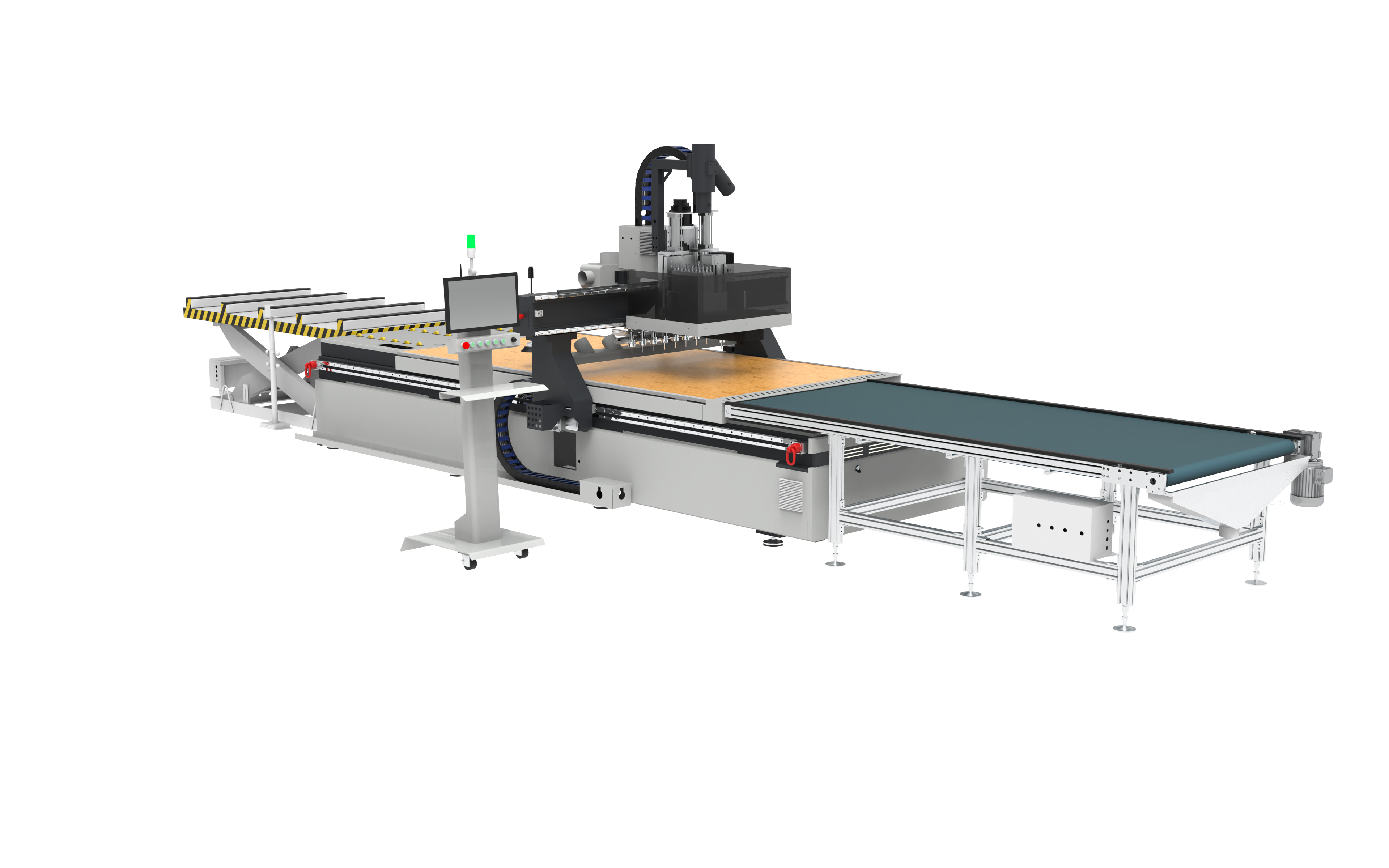
Custom panel furniture and cabinetry manufacturers face intense production bottlenecks today. Skyrocketing labor costs shrink profit margins rapidly. Meanwhile, material waste from poor yield eats directly into your shop's revenue. Disjointed workflows between cutting and drilling stations also cause frequent manual errors. They inevitably lead to frustrating assembly delays. Traditional sliding table saws simply cannot keep up. Standard point-to-point routers also struggle under modern volume demands.
To remain competitive, forward-thinking shops must transition to a consolidated nesting approach. This article explores how upgrading your floor transforms manufacturing efficiency. We will evaluate whether a cnc nesting router machine is the right capital investment for your business. You will discover exactly how this technology impacts your daily workflow. We also cover practical implementation realities to ensure a smooth transition. Ultimately, you will understand how to maximize production output and elevate your bottom line.
Key Takeaways
Material Yield: Nesting software integration consistently pushes material utilization above 90%, directly lowering raw material overhead.
Labor Efficiency: An automatic loading and unloading CNC router reduces operator intervention, shifting labor from manual cutting to system management.
Process Consolidation: Functioning as a comprehensive panel furniture CNC cutting and drilling machine, nesting equipment eliminates secondary handling between sizing and boring stations.
Risk Mitigation: Successful adoption requires aligning software compatibility (CAD/CAM), vacuum hold-down capacity, and dust collection infrastructure before purchase.
Production Bottlenecks vs. The Nesting Solution
Traditional cabinet production carries numerous hidden costs. Manual cutting processes require significant physical exertion. Operators experience fatigue quickly when muscling heavy sheets onto sliding table saws. Handling damage occurs constantly during these manual transfers. Moving parts between separate sizing and boring stations invites costly scratches. Labeling errors also plague disjointed workflows. A single transposed number ruins an entire cabinet assembly. Furthermore, manual cutting generates excessive offcut waste. These scraps pile up quickly and drain your material budget.
The nesting concept directly eliminates these inefficiencies. It combines optimized part layout and multi-tool execution into one seamless operation. Specialized nesting software mathematically arranges various cabinet parts onto a single digital sheet. It rotates and fits components tightly to maximize material yield. Once programmed, the machine executes routing, grooving, and vertical drilling. Everything happens on a single vacuum matrix table. The material remains firmly in place throughout the entire cycle.
You must view this technology as a massive throughput multiplier. It is not just another cutting tool. As a comprehensive panel furniture CNC cutting and drilling machine, it redefines shop capacity. It processes full sheets into finished, ready-to-band parts in minutes. This consolidation slashes production times dramatically. It frees your skilled workers to focus on assembly and quality control. The entire production floor becomes a highly orchestrated, continuous flow of finished components.
Standard Router vs. CNC Nesting Router Machine: What Justifies the Upgrade?
Many shop owners wonder if their standard router suffices. The hardware architecture reveals a stark difference. Standard routers often utilize T-slot or basic clamp tables. These setups work fine for solid wood or plastics. However, cabinet making relies heavily on porous materials. MDF, plywood, and particleboard lose vacuum suction easily. A dedicated nesting router features a specialized matrix vacuum table. This grid design channels immense holding power directly to specific zones. It grips small drawer parts aggressively during high-speed cutting.
Software ecosystems also dictate the machine's true potential. Standard machines rely on basic G-code generation. Operators often program simple shapes manually. A nesting machine operates differently. It leverages advanced nesting algorithms. These algorithms automatically orient grain direction for visible cabinet parts. They manage complex toolpaths to prevent tool wear. They seamlessly translate complete room designs into actionable machine code. This digital bridge removes human calculation errors entirely.
Throughput scalability ultimately justifies the upgrade. Manual sheet positioning wastes valuable minutes per cycle. Operators must jog standard routers to find the origin point. Nesting machines utilize integrated pop-up alignment pins. You simply slide the sheet against the pins for perfect registration. Advanced models include automatic push-off systems. They sweep finished parts off the bed instantly. This speed difference compounds over hundreds of sheets. It transforms a struggling shop into a high-capacity operation.
Standard Router vs. Nesting Router Capabilities
Feature
Standard CNC Router
Dedicated Nesting CNC Router
Table Design
T-slot or basic vacuum grid
High-flow matrix vacuum table
Material Handling
Manual loading and positioning
Pop-up pins, optional automated loading
Software Integration
Basic CAD/CAM, manual G-code
Advanced nesting algorithms (grain match)
Production Speed
Low to medium volume
High volume, rapid continuous throughput
Workflow Dynamics: The Automatic Loading and Unloading CNC Router
Understanding the daily operation requires a close look at the production cycle. An automated cell operates with incredible rhythm. It removes the heavy lifting from your employees. It dictates a predictable, measurable pace for your entire facility. Let us detail the step-by-step cycle of an automatic loading and unloading CNC router.
Automated Feeding: The cycle begins at the loading bay. Scissor lifts elevate the bunk of raw material to bed height. Suction cup gantries pull individual raw sheets directly onto the machine bed. This eliminates dangerous manual lifting and prevents worker injuries.
Single-Setup Machining: The vacuum engages instantly. The spindle and drill bank work simultaneously. They size the outer dimensions, cut structural grooves, and bore vertical holes. The panel remains perfectly stationary in one fixed position.
Intelligent Offloading: Once cutting concludes, the push-off mechanism activates. It sweeps finished parts and residual dust onto a conveyor belt. Simultaneously, the suction gantry pulls the next raw sheet into position. Zero time is wasted between cycles.
Downstream Integration: Parts arrive at the offload station. Integrated barcode label printing occurs here. Operators scan and label each part seamlessly. These labels guide downstream edge-banding and assembly routing flawlessly.
This automated workflow drastically reduces operator intervention. The operator simply manages the digital queue and applies labels. The machine handles all the heavy physical execution. This dynamic shift creates a highly predictable manufacturing environment.
Key Evaluation Criteria for a CNC Nesting Machine for Cabinet Production
Selecting the right equipment demands careful technical scrutiny. You must evaluate several critical components before committing capital. Vacuum hold-down capacity ranks highest in importance. Cutting full sheets into small cabinet components creates holding challenges. Small drawer parts often shift during aggressive cutting passes. You need high-flow vacuum pumps to prevent this. Becker rotary vane pumps are industry favorites. We recommend a minimum of 250m³/h per vacuum zone. This high capacity ensures absolute part retention during rapid routing.
Next, assess the spindle and Automatic Tool Changer (ATC). Cabinet making involves heavy material removal. A weak spindle bogs down and burns tooling. We recommend a minimum 9kW (12HP) spindle for continuous industrial use. It powers through thick panels effortlessly. The ATC is equally crucial. Complex hardware prep requires multiple distinct router bits. A rapid tool-change carousel containing 8 to 12 slots is mandatory. It swaps tools in seconds, keeping cycle times incredibly low.
The drill bank configuration dictates your joinery options. Evaluate the exact mix of vertical and horizontal spindles. Your specific joinery methods determine this requirement. Cam-lock fittings, dowel construction, and blind dados all need different boring patterns. A robust drill block executes standard 32mm system holes simultaneously. It saves immense time compared to routing holes individually.
Finally, verify control system and software agnosticism. Your machine controller acts as the brain. Brands like Syntec, OSAI, and Siemens offer robust reliability. However, they must communicate flawlessly with your chosen cabinet design software. Ensure the CNC nesting machine for cabinet production accepts standard outputs. It should integrate perfectly with Cabinet Vision, Mozaik, or Microvellum without expensive custom programming.
Implementation Realities: Hidden Costs and Adoption Risks
Purchasing the machine represents only the first step. Successful implementation requires acknowledging real-world adoption hurdles. Software licensing and integration present immediate challenges. The machine is truly only as good as the software driving it. Initial machine purchases often lack advanced design front-ends. You must budget for specialized CAD/CAM nesting software. Note potential recurring subscription costs. Also, anticipate custom post-processor fees to link your software to the specific machine controller.
Infrastructure requirements often surprise new buyers. You must prepare your shop floor accordingly. Consider these critical facility upgrades:
Floor Space Footprint: Automated cells demand significant real estate. You must account for loading scissor lifts, the main machine bed, and unloading conveyor zones. Leave ample room for forklift access.
Dust Collection Systems: Nesting generates massive volumes of fine particulate. High-volume dust collection is non-negotiable. You need strict CFM minimums to extract chips effectively. Poor extraction causes tool wear and poses severe fire risks.
Pneumatic Supply: Automated components rely entirely on compressed air. You must provide a stable, clean, and dry pneumatic air supply. Moisture in your air lines will destroy sensitive internal valves rapidly.
You must also manage the operator skill shift carefully. You are replacing a traditional sawyer with a machine technician. The training curve is steep but necessary. Troubleshooting shifts entirely from mechanical adjustments to digital problem-solving. Operators must learn to read G-code errors and optimize vacuum zones. Invest heavily in initial training to avoid frustrating production halts.
How to Shortlist and Validate Your Investment
Navigating the equipment market requires a structured approach. Start by mastering capacity matching. You must match machine specifications to your expected daily sheet volume. A shop processing 30 to 50 sheets daily needs a different machine than one cutting 100+ sheets. Do not overbuy features you will never utilize. Conversely, under-sizing your equipment leads to premature wear and frustrating bottlenecks. Analyze your current output and project your three-year growth.
Vendor support and parts availability should heavily influence your final decision. Machines inevitably break down. When they do, every hour costs money. Prioritize vendors offering domestic service technicians. Remote diagnostic capabilities are incredibly valuable. Technicians can often fix software glitches via internet connection in minutes. Furthermore, insist on off-the-shelf component availability. Your CNC nesting router machine for panel furniture should use standardized servos, rails, and drives. Proprietary parts lead to agonizing delays.
Finally, enforce the demo mandate. Never purchase equipment based solely on a brochure. Insist on running a comprehensive time-study demo. Provide the vendor with your own nested files. Demand they use your primary sheet material during the test. This verifies real-world cycle times accurately. It also allows you to inspect edge finish and cut quality firsthand. A successful demo proves the machine can handle your specific cabinetry requirements.
Conclusion
Transitioning to automated nesting represents a profound strategic pivot. You are moving from manual craftsmanship to data-driven manufacturing. This shift completely eliminates traditional production bottlenecks. It maximizes material yield while dramatically reducing physical operator fatigue. The integration of software and automated handling creates an unstoppable production rhythm.
While the upfront capital investment appears substantial, the payback period is highly predictable. Material savings and labor reallocation drive your return steadily. You stop paying for wasted offcuts and manual handling errors. Instead, you pay for speed, accuracy, and scalability.
Take the next step toward modernizing your shop floor today. Request a custom production analysis from a trusted equipment vendor. Schedule a technical consultation to discuss your specific floor space and software needs. Download detailed machine specification sheets to compare models. Your competitors are already automating. Do not let outdated equipment dictate your production ceiling.
FAQ
Q: How much faster is a CNC nesting machine compared to a sliding table saw?
A: A nesting machine is vastly faster. It completes sizing, grooving, and vertical drilling in a single cycle. This eliminates moving panels between separate machines. A typical automated cycle processes a full sheet in 5 to 7 minutes. It reduces overall production time by up to 60%.
Q: Can a nesting CNC machine drill horizontal holes?
A: Standard flat-table nesting machines struggle with horizontal boring. The flat bed obstructs horizontal drill access to the panel edges. Most shops pair their nesting router with a secondary side-hole drilling machine. Some advanced machines use specialized aggregates, but secondary machines remain faster for volume production.
Q: What software is required to run a CNC nesting router machine for panel furniture?
A: You need two distinct software layers. First, front-end CAD/CAM nesting software (like Cabinet Vision or Mozaik) designs cabinets and optimizes sheet layouts. Second, the machine control software (like Syntec or OSAI) reads the generated code to execute the physical cutting paths accurately.
Q: How do you prevent small parts from moving during the nesting process?
A: Operators use several techniques. High-flow vacuum zone management concentrates suction directly under small parts. Onion-skinning is very common; the router leaves a paper-thin material layer on the first pass, cutting it fully on a final, low-pressure pass. Tabbing also keeps small pieces temporarily attached to scrap.
Shandong Youhao Energy Technology Co., Ltd located in Rizhao E&D zone, is one leaderof CNC manufactures in wood-working machinery industry, which dedicates to the R&D.