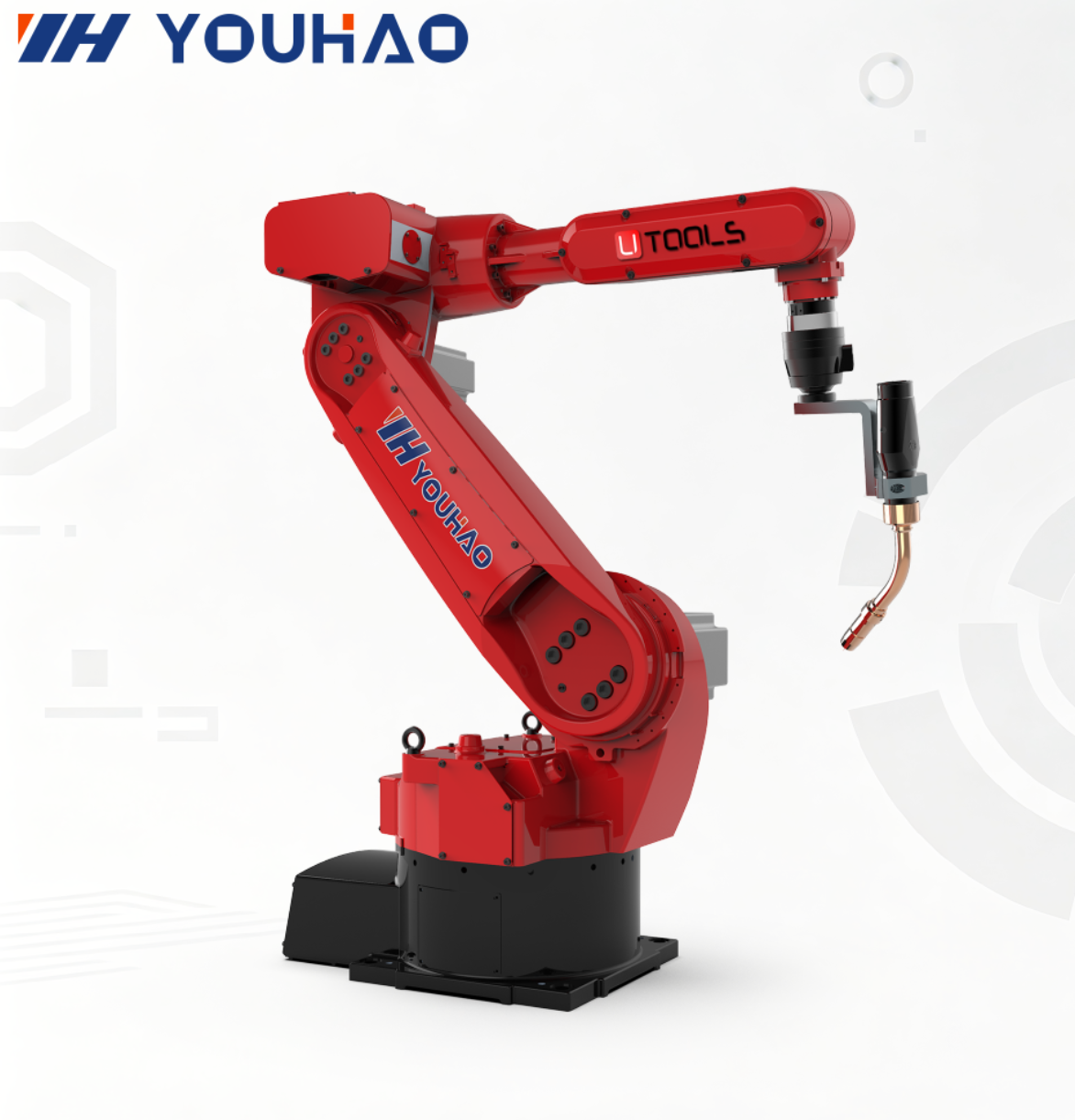
Are labor shortages slowing your factory down? Rising operational costs hurt your margins daily, while manual production lines inevitably face bottlenecks, inconsistent quality, and severe safety risks. Scaling operations under these traditional constraints becomes nearly impossible in today's fast-paced market. Introducing Industrial Robotic Automation is no longer just a futuristic concept; it is the ultimate strategy to transform a struggling, labor-dependent facility into a highly efficient, lean, and scalable smart factory. In this comprehensive guide, we will walk you through the practical steps of robot integration, discussing application-specific solutions that target your most pressing manufacturing challenges.
Key Takeaways
Before diving into the technical execution of upgrading your manufacturing facility, it is essential to understand the core principles that drive successful automation. The transition requires objective planning, precise equipment selection, and a commitment to continuous optimization.
Strategic Pillar
Empirical Benefit
Application Focus
Strategic Assessment
Identifies high-yield automation targets to ensure capital is deployed efficiently.
Focus on the "3 Ds": Dull, Dirty, and Dangerous tasks.
Application-Specific Solutions
Matches robot kinematics and software to specific fabrication requirements.
Complex geometries require 6-axis systems; simple transfers need 4-axis systems.
Efficiency in Handling
Reduces machine idle time and stabilizes throughput rates.
CNC machine tending, palletizing, and high-speed pick-and-place operations.
Flawless Finishing
Eliminates human inconsistency in surface treatment processes.
Force-controlled grinding, deburring, and polishing.
Seamless Integration
Bridges the gap between mechanical hardware and facility software.
PLC communication, safety protocols, and lean robotics principles.
The Business Case for Transitioning to Robotics
Manufacturing decision-makers know that technology investments must be justified by hard data. The current industry landscape is shifting rapidly, moving away from simple repetitive labor toward AI-driven, highly adaptable systems. Global manufacturing trends indicate that high-mix, low-volume production is the new norm. Factories are now prioritizing systems that offer real-time vision correction and adaptive path planning. This flexibility is no longer a luxury; it is a prerequisite for staying competitive against agile, technology-first rivals.
While the initial capital expenditure for robotic systems involves arms, end-of-arm tooling, and safety enclosures, the long-term operational impact is significant. Robots provide absolute repeatability. This precision reduces raw material waste and eliminates the need for expensive rework. When amortized over a decade or more, the cost per operational hour for a robotic unit often falls well below manual labor rates, creating a clear path to a faster Return on Investment.
Workplace safety also improves by design. By delegating heavy lifting, exposure to toxic welding fumes, or high-temperature environments to machines, you mitigate the risk of workplace injuries. This shift not only protects your workforce but also reduces insurance premiums and regulatory liability. Furthermore, the capacity for 24/7 "lights-out" production allows your facility to maximize equipment utilization, meeting delivery schedules without the overhead of overtime pay.
Assessing Your Production Line Readiness
A successful integration strategy starts with a methodical audit. If you attempt to automate without understanding your current workflow constraints, you will likely end up with isolated, inefficient cells. Start by walking your factory floor to map out where parts accumulate—these are your primary bottlenecks.
Your team should focus on the "3 Ds": Dull, Dirty, and Dangerous. A task that is highly repetitive, environmentally challenging, or physically demanding is a prime candidate for a robot. Once you have identified these targets, evaluate your physical constraints. You must ensure the robotic reach and payload capacity can handle the parts plus the end-of-arm tooling at full extension. Failure to account for these dynamics early can lead to hardware that is either inadequate or significantly oversized for your needs.
Automating Fabrication with Advanced Welding Systems
Welding remains a cornerstone of heavy manufacturing, yet it is often plagued by skill shortages and inconsistent output. Automating this phase requires hardware that replicates the nuanced movements of a master welder while maintaining tireless precision.
For complex geometries or tight structural angles, 6-axis articulated arms are the industry benchmark. By deploying an Articulated Robot Arm with Smart Welding System Industrial Robotic Welding Automation setup, you unlock the power of sensory feedback. Modern systems use laser seam tracking and automated voltage control to detect minor thermal distortions. These controllers adjust the torch path in real-time, ensuring optimal penetration and a clean bead profile. This level of quality control significantly reduces the need for post-weld cleanup, effectively shortening your overall production timeline.
Streamlining Logistics and CNC Tending
Material handling is a non-value-added activity by nature. Every second a part spends waiting to be moved is a second of lost potential. Therefore, optimizing your logistical flow is essential for achieving a lean manufacturing environment.
For horizontal and vertical transfers that do not require complex wrist articulation, an Industrial Robot 4-Axis Handling Robotic Arm is an exceptionally efficient solution. These units are built for high-speed pick-and-place operations and reliable CNC machine tending. In environments where coolant mist and flying metal shavings are common, selecting hardware with an IP54 ingress rating is a critical design choice. This protection prevents debris from compromising the internal mechanics, ensuring the spindle on your lathes and mills stays active and profitable.
Perfecting Product Finish through Robotics
Surface finishing processes like grinding, deburring, and polishing are notoriously difficult to standardize manually. Human operators naturally tire, leading to inconsistent pressure and variable finishes across a production batch. The result is often a higher scrap rate or lengthy quality inspection delays.
To overcome this, you can implement an Automation Precision Grinding Robot Multi-Tool Flexibility Industrial Robotic Polishing system. These solutions use force-torque sensors on the wrist to "feel" the workpiece surface. The robot dynamically adjusts to maintain constant pressure against the contour, ensuring a mirror-like finish regardless of minor dimensional variances in the part. Multi-tool capability further enhances this efficiency, allowing the system to swap between grinding wheels and polishing pads in one seamless cycle.
System Integration and Lean Execution
Hardware is only half of the equation. To truly revolutionize your facility, you must integrate these systems into your central manufacturing logic. Synchronizing your robotic controllers with existing Programmable Logic Controllers ensures a smooth handover between cells and conveyor systems.
Furthermore, lean robotics principles should guide your layout design. Use offline simulation software to refine your path planning before the robot ever touches a piece of metal. This reduces unnecessary movement and minimizes cycle times. By designing a cell that emphasizes logical, non-overlapping workflows, you reduce wait times between cycles and ensure that your automation directly supports a leaner, more agile factory floor.
Upskilling and Performance Optimization
The transition to automation requires a proactive approach to workforce development. Many fear that robots displace workers, but in reality, they act as force multipliers. You are shifting the human role from hazardous, repetitive labor to high-value supervisory and programming work.
Invest in training your team on teach-pendant operations and basic maintenance. When your operators understand how to troubleshoot and optimize the system, your internal technical competency grows alongside your production capacity. Once the system is live, focus your management on Key Performance Indicators like OEE and Cycle Time. Data-driven analysis allows your engineering teams to spot micro-inefficiencies and keep your production levels high as market demands evolve.
Conclusion
Automating your production line is no longer just for massive automotive plants; it is a survival and growth strategy for any modern manufacturer. Whether you are addressing welding consistency with articulated systems or maximizing CNC uptime with 4-axis handling arms, the tools are available to help you scale dynamically. Embrace the transition to smart manufacturing to protect your margins and secure your future. Contact our engineering team today for a professional production audit and learn how we can tailor a robotic integration plan to your facility.
How long does it take to see a Return on Investment for industrial robotic automation?
The typical payback period for a robotic cell is between 12 and 24 months. This duration fluctuates based on your specific application, local labor costs, and your ability to run the equipment across multiple shifts, which dramatically maximizes the utilization of your capital investment.
Can one industrial robot perform multiple tasks on the production line?
Yes, modern robotics are highly versatile. With the use of automatic tool changers, a single robot can perform several distinct operations. For instance, it can switch between heavy grinding, deburring, and final polishing within one programmed sequence, effectively consolidating multiple manual steps into one station.
Is it difficult to program a 4-axis handling robotic arm?
It has become much simpler in recent years. Modern industrial robots feature intuitive teach pendants and user-friendly offline programming software. Many systems also include hand-guiding features, allowing floor operators to define waypoints without needing to be professional coders.
What safety measures are required when automating a production line?
Safety is the top priority during integration. Standard protocols include physical perimeter fencing, interlocking safety gates, and advanced light curtains or laser scanners. These sensors are hardwired to the robot controller to ensure that if a person enters the work envelope, the system halts instantly to prevent accidents.
Shandong Youhao Energy Technology Co., Ltd located in Rizhao E&D zone, is one leaderof CNC manufactures in wood-working machinery industry, which dedicates to the R&D.